Built-In 2.4 GHz Wi-Fi
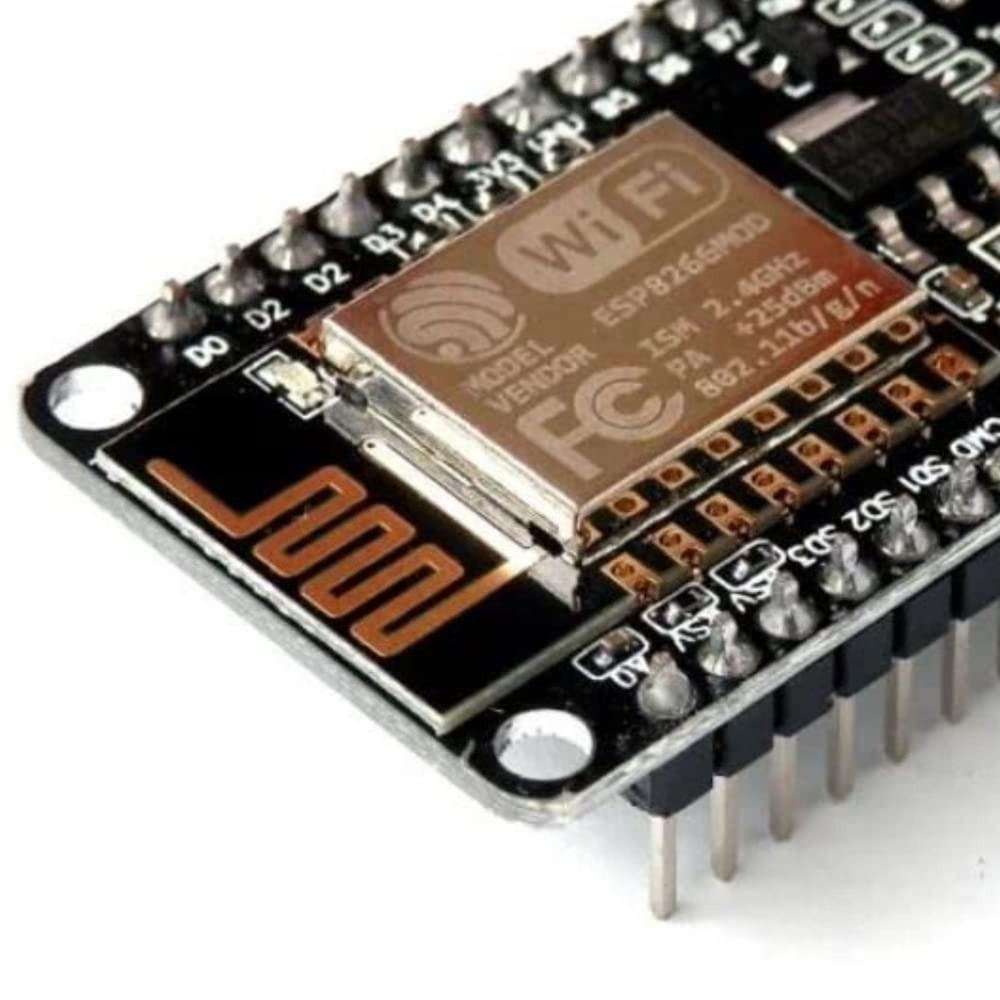
The ESP8266 provides integrated 802.11 b/g/n Wi-Fi, allowing projects to connect to wireless networks without requiring a separate Wi-Fi module.
ESP8266 Processing
The ESP8266 uses a 32-bit Tensilica processor and typically operates at 80 MHz, with support for operation at up to 160 MHz depending on configuration and firmware.
4 MB Flash Memory
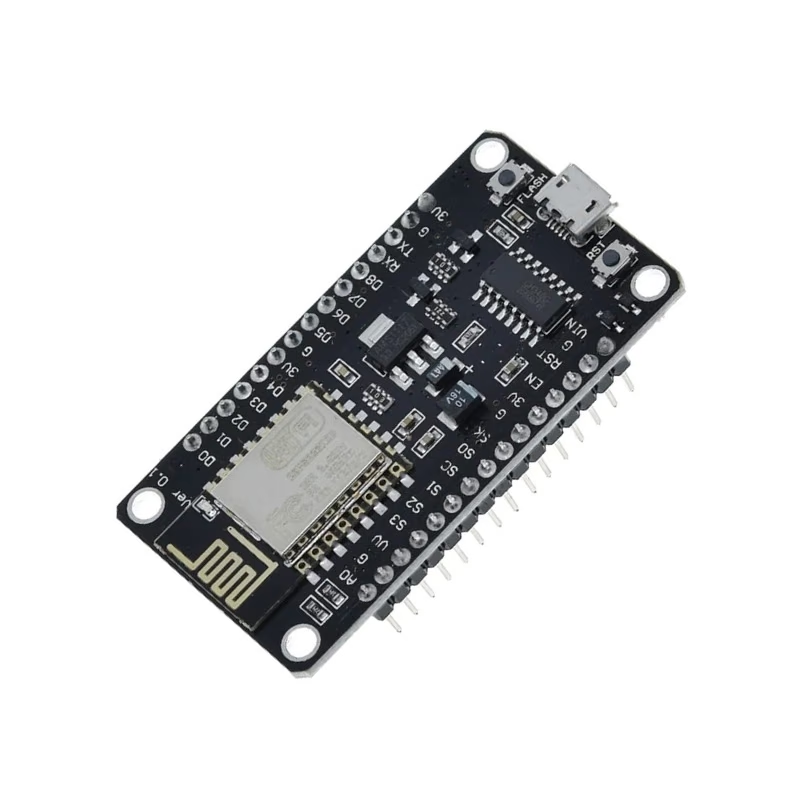
The commonly sold ESP-12E NodeMCU V3 boards provide 4 MB of flash memory, giving you space for firmware and IoT applications.
CH340 USB-to-Serial Interface
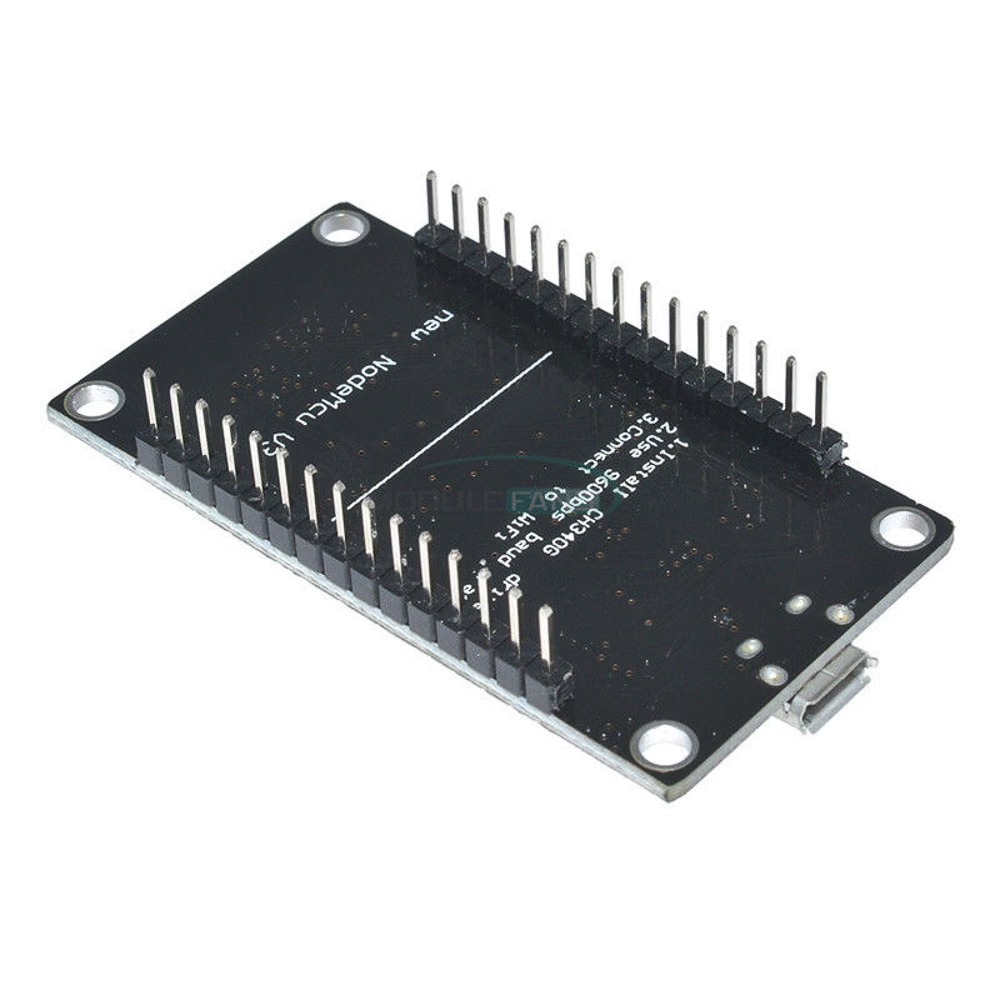
The onboard CH340 USB-to-serial converter makes programming and serial communication straightforward through the Micro-USB port.
Breadboard-Friendly Design
The compact board exposes its GPIO pins through standard header spacing, making it convenient for breadboard prototyping and classroom electronics projects.
Multiple Programming Options
The board can be used with:
Arduino IDE
NodeMCU firmware / Lua
MicroPython
PlatformIO
This flexibility makes it suitable for both beginner-friendly educational projects and more advanced IoT development.
GPIO & Interface Capabilities
The NodeMCU ESP8266 V3 provides multiple exposed GPIO pins that can be used for:
Digital input/output
PWM
UART
SPI
I²C
Interrupt-based applications
1-Wire devices
It also provides one analog input channel (A0) for reading analog sensor signals.
Important A0 Note
The ESP8266's native ADC has a 0–1.0V input range. Many NodeMCU development boards include an onboard voltage divider that allows a higher voltage to be measured at the board's A0 pin. Because the implementation can vary between board manufacturers and revisions, verify the A0 input range of the exact board supplied before connecting a sensor output.
Power & Voltage
The ESP8266 operates internally at 3.3V, and its GPIO logic is 3.3V.
The board can commonly be powered through its Micro-USB port, where the USB supply is regulated onboard for the ESP8266. Some V3/CH340 board versions also expose a VIN input with a specified voltage range.
Important: Because NodeMCU V3 boards are produced by multiple manufacturers, the exact VIN specification can differ. Check the markings/specification of the actual board before applying external voltage to VIN.
3.3V Logic — Important
Do not connect 5V logic directly to ESP8266 GPIO pins.
When connecting 5V sensors, displays, Arduino boards, or other peripherals, verify their signal voltage requirements and use an appropriate level-shifting solution where necessary.
Wi-Fi Capabilities
The ESP8266 supports 2.4 GHz 802.11 b/g/n Wi-Fi and can operate in different networking configurations, including:
Station Mode
Access Point Mode
Station + Access Point Mode
This allows you to build projects ranging from simple Wi-Fi sensor nodes to standalone web-controlled devices.
Note: ESP8266 does not support 5 GHz Wi-Fi.
|



Reviews
There are no reviews yet.