

Switch Real-World Loads with a Microcontroller
A microcontroller such as an Arduino can make decisions, read sensors, and execute programs—but its GPIO pins are designed for low-power control signals, not for directly switching high-power electrical loads.
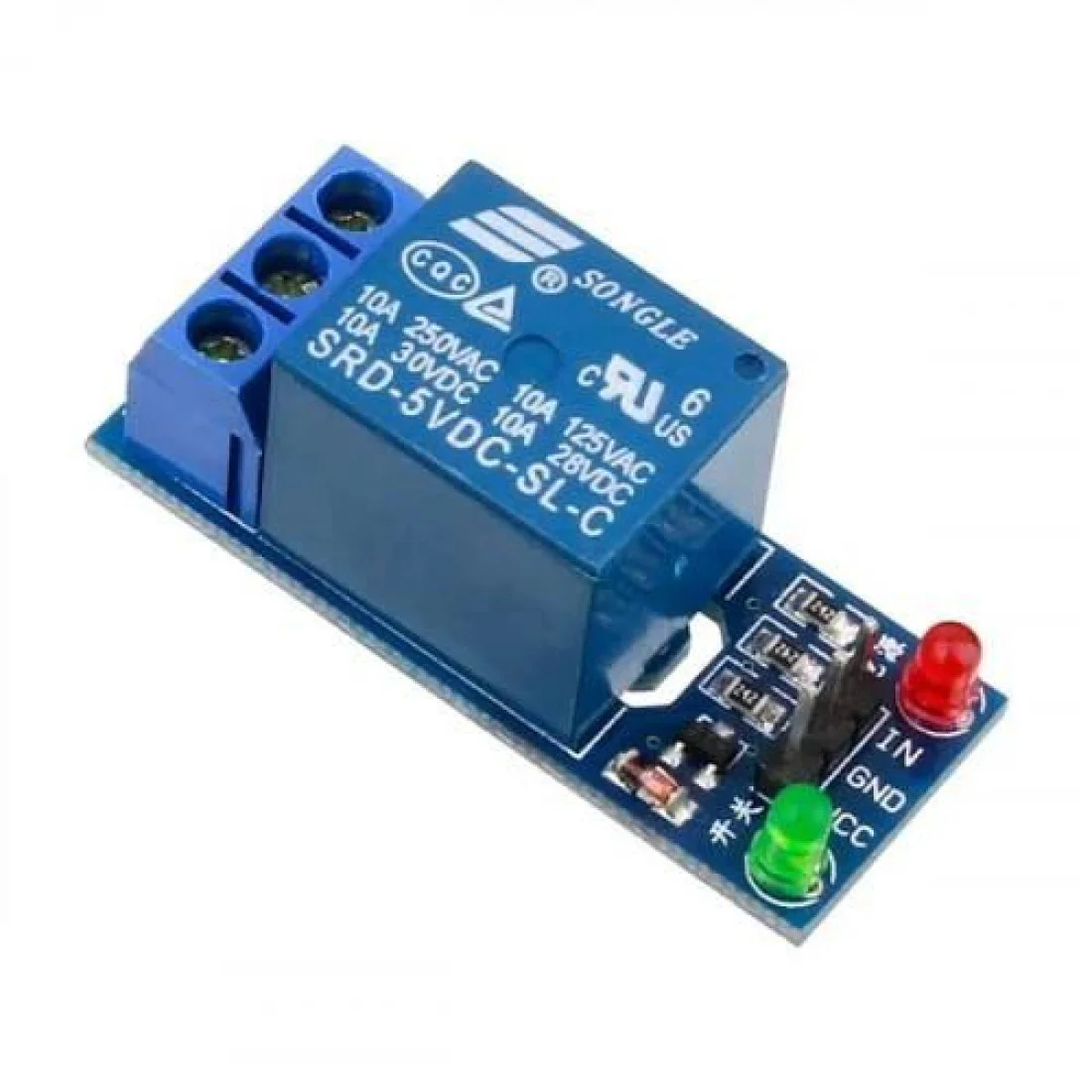
The 5V 1-Channel Relay Module provides a practical interface between a microcontroller and an external electrical load.
When the control input activates the relay, an internal electromagnetic mechanism changes the state of the relay contacts. This allows the connected load circuit to be switched independently of the low-voltage control signal.
The module is useful for projects involving lights, small pumps, fans, solenoids, motors, alarms, and other compatible AC or DC loads, provided that the load remains within the relay’s rated electrical limits and the complete installation is appropriately designed.
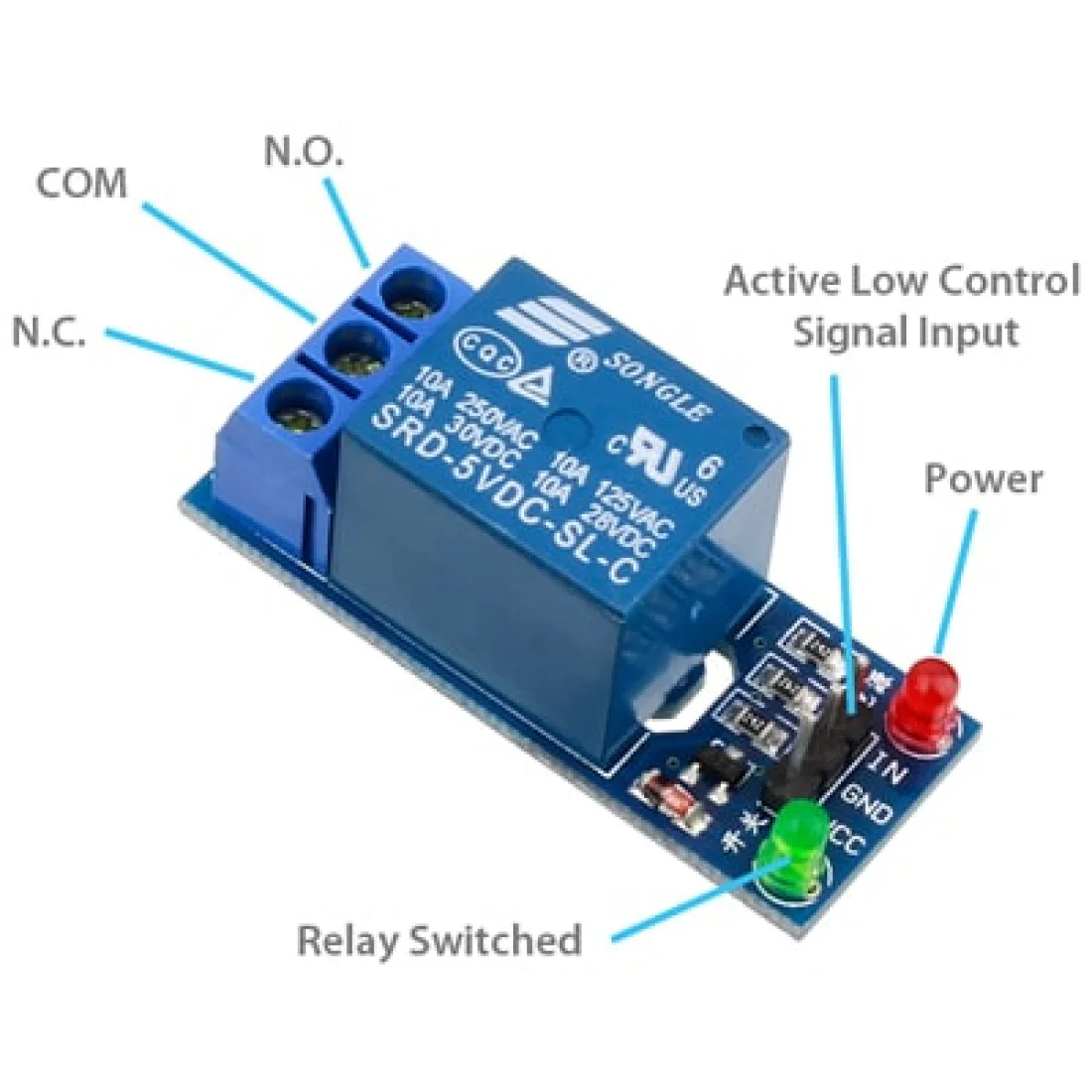
The relay provides COM (Common), NO (Normally Open), and NC (Normally Closed) contacts, giving you flexibility in deciding how the load behaves when the relay is not energized.
For students, makers, and robotics learners, it is an excellent component for understanding switching, automation, electrical control, and the relationship between low-voltage electronics and external power systems.
Reviews
There are no reviews yet.