
🎉 School Lab Bundles Now Live — 30-Student Sets from ₹1,49,999 | Use code SCHOOL10 for extra 10% off View Packages →

Sale!
,

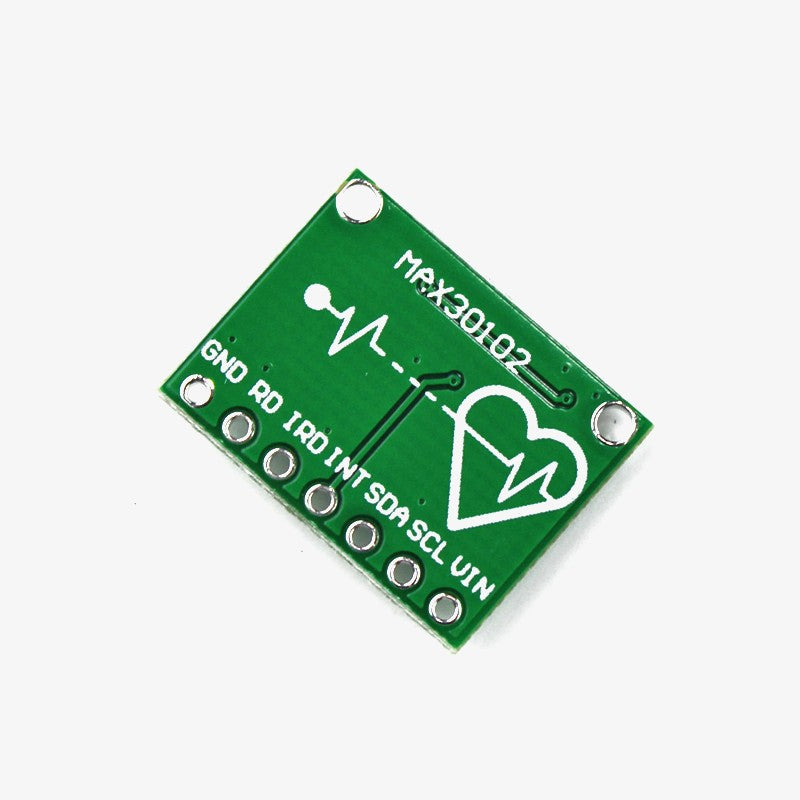
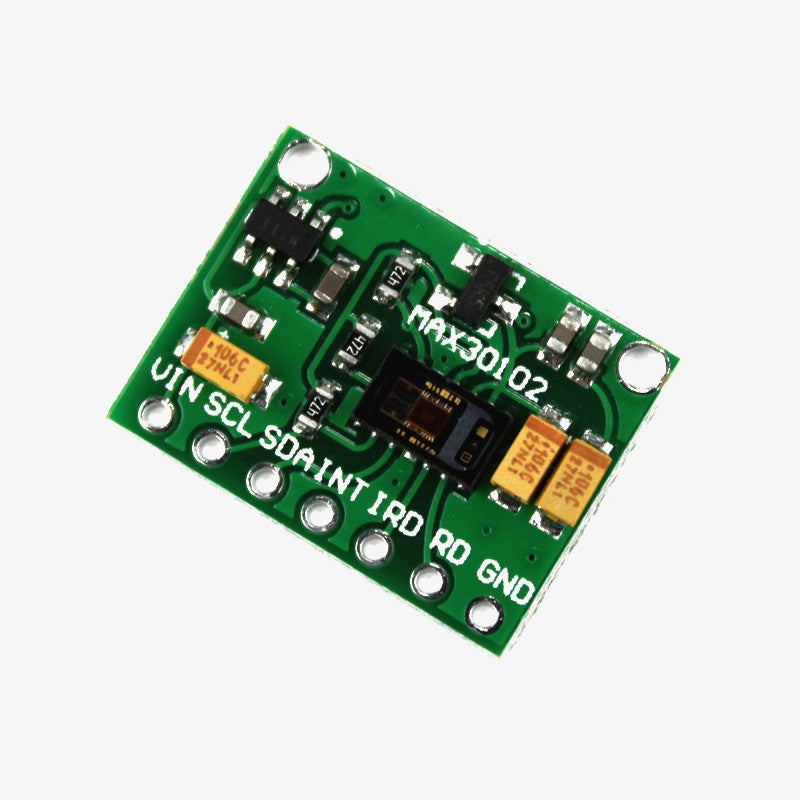
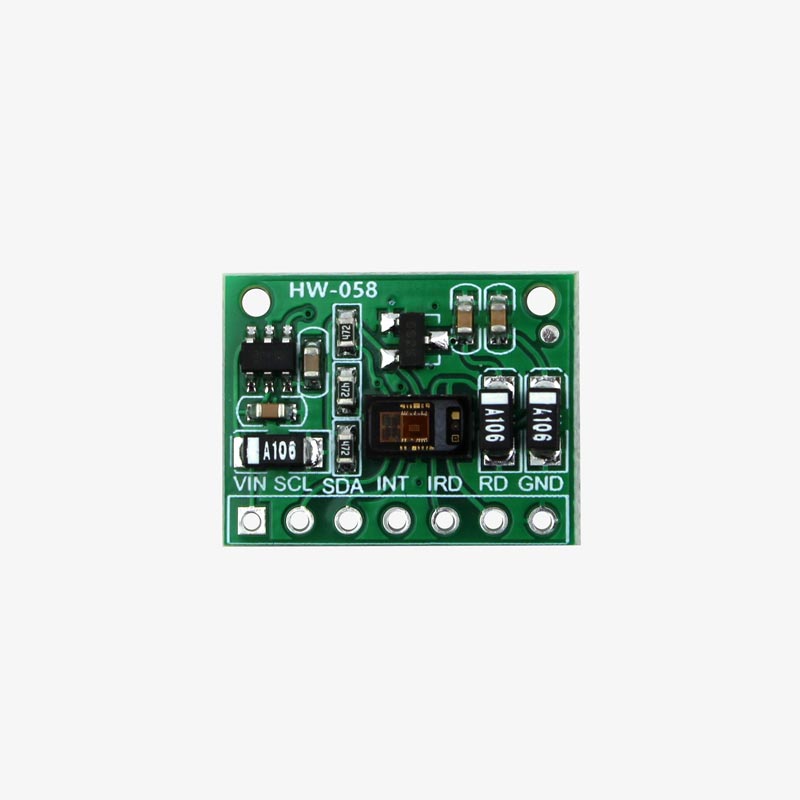
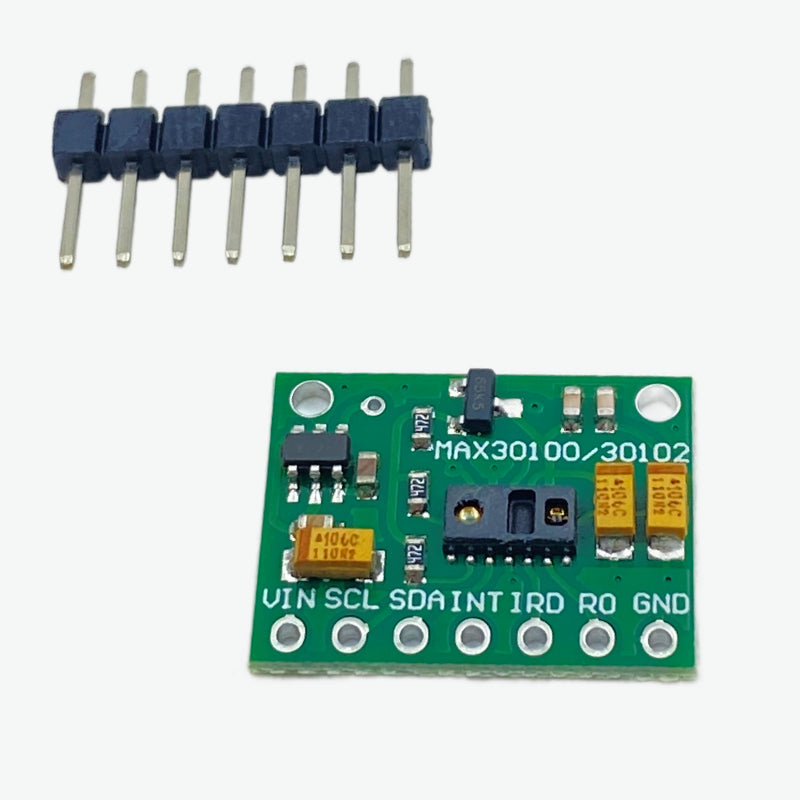
MAX30102 Pulse Oximeter & Heart Rate Sensor Module

Original price was: ₹ 250.00.Current price is: ₹ 145.00.

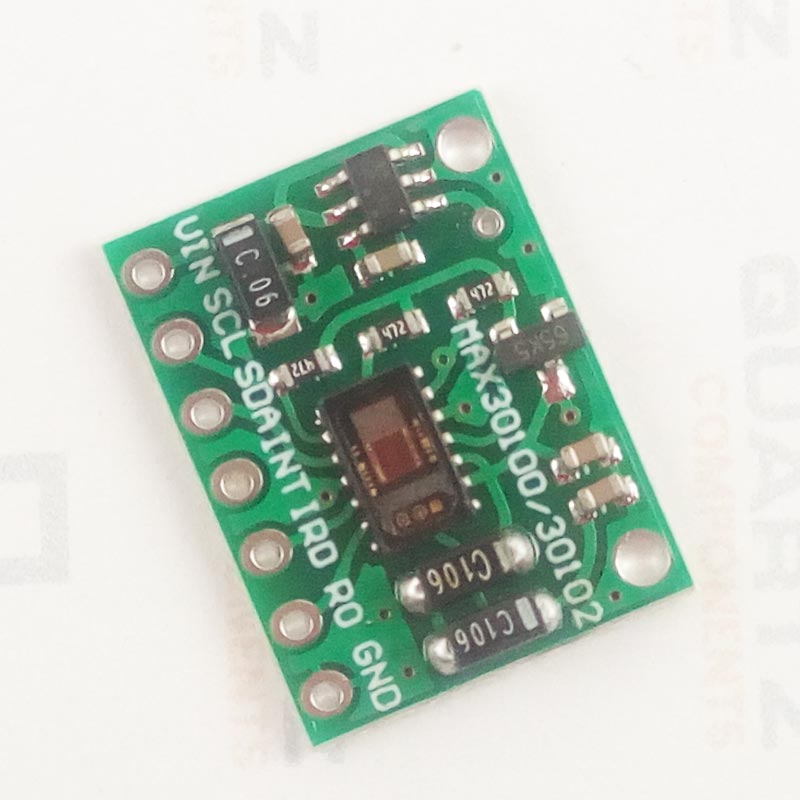
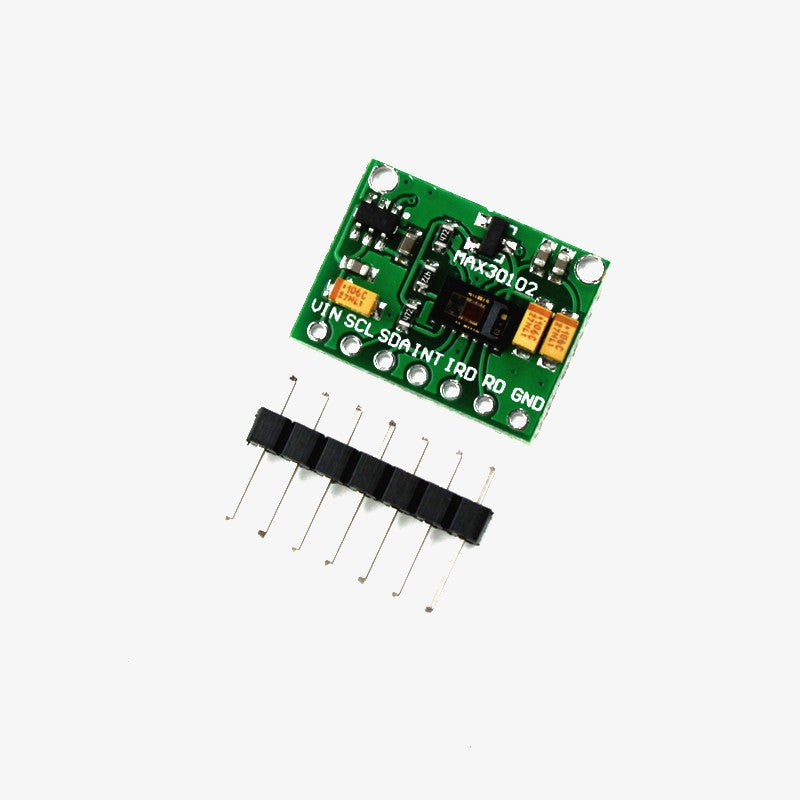
Explore biometric sensing with the MAX30102 Pulse Oximeter & Heart Rate Sensor Module. Using optical photoplethysmography (PPG), this compact sensor captures red and infrared light data that can be processed to estimate heart rate and blood oxygen saturation (SpO₂) in suitable prototype applications. Its I²C interface makes it ideal for Arduino, ESP32, wearable-electronics, and biomedical engineering projects.

Bring Optical Biometric Sensing to Your Projects

Electronics can measure much more than temperature, light, or distance. With the right sensors, microcontrollers can also explore optical signals generated by the human body.

The MAX30102 is an integrated optical sensor designed for applications such as heart-rate and pulse-oximetry sensing. It combines red and infrared LEDs with a photodetector and signal-processing circuitry to capture changes in reflected or transmitted light associated with blood-volume changes.

This process is known as photoplethysmography (PPG).

When a finger or another suitable measurement site is placed over the sensor, changes in the detected optical signal can be processed by software to estimate parameters such as heart rate (BPM) and, with appropriate algorithms and signal quality, blood oxygen saturation (SpO₂).

The module communicates with a compatible microcontroller using an I²C interface, making it suitable for compact electronics prototypes where multiple sensors need to share the same communication bus.

It is particularly useful for students, makers, and developers exploring biomedical engineering, wearable technology, signal processing, IoT, embedded systems, and human-sensing applications.
Perfect For

Biomedical engineering prototypes
Wearable electronics experiments
Heart-rate sensing projects
PPG signal experiments
Educational pulse-oximetry demonstrations
Arduino biometric projects
ESP32-based wearable prototypes
IoT health-monitoring concepts
Human-sensing projects
Signal-processing experiments
Data visualization and sensor logging
STEM and electronics education
PM SHRI Lab biomedical engineering projects

Technical Specifications

Specification Details
Sensor IC MAX30102
Sensor Type Optical biometric / PPG sensor
Optical Sources Red and infrared LEDs
Detection Method Photoplethysmography (PPG)
Typical Measurements Heart-rate and SpO₂ estimation using appropriate software algorithms
Communication Interface I²C
I²C Connections SDA and SCL, plus VCC and GND for power
Operating Voltage Depends on breakout-board design; verify the supplied module
Application Wearable electronics, biometric prototypes, embedded systems and STEM projects
Sensor Package Integrated optical sensing module

How the MAX30102 Works

The MAX30102 uses optical sensing to detect changes associated with blood flow.

1. Light Emission

The module uses red and infrared LEDs to illuminate the measurement area.

2. Optical Detection

A photodetector measures changes in the returned/transmitted light.

3. PPG Signal

As blood volume changes with each heartbeat, the detected optical signal changes.

4. Digital Processing

The raw sensor data can be read by a microcontroller and processed using suitable algorithms to estimate parameters such as heart rate and SpO₂.

This makes the module an excellent platform for learning about the relationship between electronics, optics, signal processing, and human physiology.

Key Features

Red & Infrared Optical Sensing

The MAX30102 integrates red and infrared LEDs with an optical detector for PPG-based sensing applications.

I²C Interface

The module communicates digitally over I²C, making it convenient to connect with compatible development boards while sharing the bus with other I²C devices.

Compact Module

Its small form factor makes it suitable for wearable prototypes, compact electronics, and breadboard-based experiments.

Suitable for Signal Processing

The sensor provides data that can be processed by a microcontroller to study pulse waveforms, filtering, noise reduction, peak detection, and other signal-processing techniques.

Excellent for Biomedical STEM Projects

Students can use the module to explore how optical sensors can be used to collect physiological signals and how algorithms convert raw sensor data into useful measurements.

Example Projects

Heart Rate Monitor Prototype

Read PPG data and develop software that estimates heart rate in beats per minute.

Educational Pulse-Oximetry Demonstration

Build a prototype that demonstrates how red and infrared optical measurements can be processed to estimate SpO₂.

Wearable Electronics

Integrate the sensor into an experimental wearable device using a compact microcontroller such as an ESP32.

IoT Biometric Dashboard

Transmit processed sensor readings from an ESP32 or similar controller to a local or cloud-based dashboard.

PPG Signal Visualization

Capture raw optical data and visualize the waveform to study pulse-related signal changes.

Biomedical Engineering Project

Use the MAX30102 as a practical introduction to optical sensing, data acquisition, filtering, and physiological signal processing.

Arduino & ESP32 Compatibility

The module is commonly used with development platforms such as:

Arduino UNO
Arduino Nano
Arduino Mega
ESP32
ESP8266 / NodeMCU
Other compatible I²C development boards

Important: Electrical compatibility depends on the specific breakout board.

The MAX30102 IC itself is a low-voltage device. Some commercially available breakout boards include voltage regulation and/or logic-level support, while others may not.

Always verify the actual module's VCC and logic-level requirements before connecting it to a 5V Arduino or a 3.3V development board.

I²C Communication

The module uses the I²C interface, requiring:

VCC — Power
GND — Ground
SDA — I²C Data
SCL — I²C Clock

The exact I²C address and module implementation should be checked against the supplied breakout board and its documentation.

Educational Learning Outcomes

This sensor can help students explore:

Photoplethysmography (PPG)
Optical sensing
Biomedical instrumentation concepts
Digital signal processing
Noise filtering
Peak detection
I²C communication
Sensor data acquisition
Data visualization
Wearable technology
IoT system development
Human-machine interfaces

Product Highlights

Optical Biometric Sensing
Explore physiological signals using red and infrared optical sensing.

PPG-Based Measurement
Learn how changes in blood volume can be detected optically and processed into useful information.

I²C Interface
Connect the module to compatible microcontrollers using a simple digital communication bus.

Compact Form Factor
Suitable for wearable prototypes and space-conscious electronics projects.

Great for Biomedical STEM
A practical platform for combining electronics, programming, optics, biology, and data analysis.

Important Accuracy & Usage Information

This product is an electronic sensor module for educational, experimental, and prototype development.

The module itself does not guarantee medically accurate heart-rate or SpO₂ readings.

Actual measurement quality can be affected by:

Finger or sensor placement
Movement
Ambient light
Skin characteristics
Contact pressure
Sensor orientation
Electrical noise
Optical interference
Software algorithms
Signal-processing quality
Breakout-board design

Obtaining reliable heart-rate or SpO₂ estimates requires appropriate hardware, signal processing, calibration, testing, and application-specific validation.

Not a Medical Device

This product is not a certified medical device and must not be used for diagnosis, treatment, emergency monitoring, or other clinical decision-making.

Any heart-rate or SpO₂ values produced by a project using this module should be considered experimental or educational measurements, not medical readings.

For medical applications, a complete system would require appropriate validation, calibration, testing, safety controls, and applicable regulatory approval.

Important Product Information

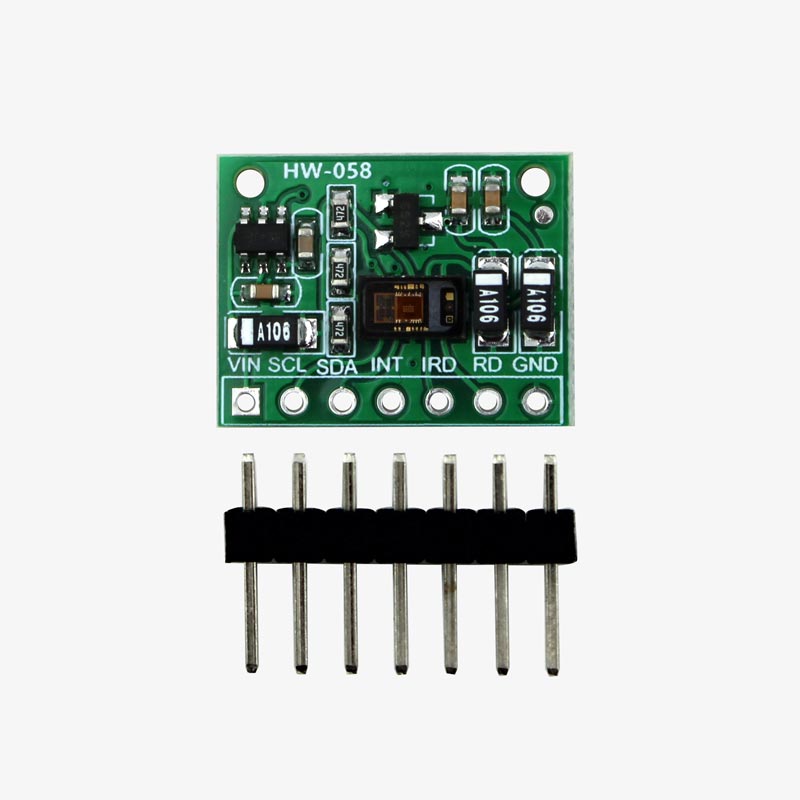
Because this is a generic breakout module, the exact board configuration can vary between manufacturing batches.

Possible variations include:

Voltage regulator
Logic-level circuitry
Pin arrangement
LED/indicator configuration
PCB dimensions
Connector layout
Component markings

Always refer to the physical module supplied with your order for exact hardware configuration.

Package Contents

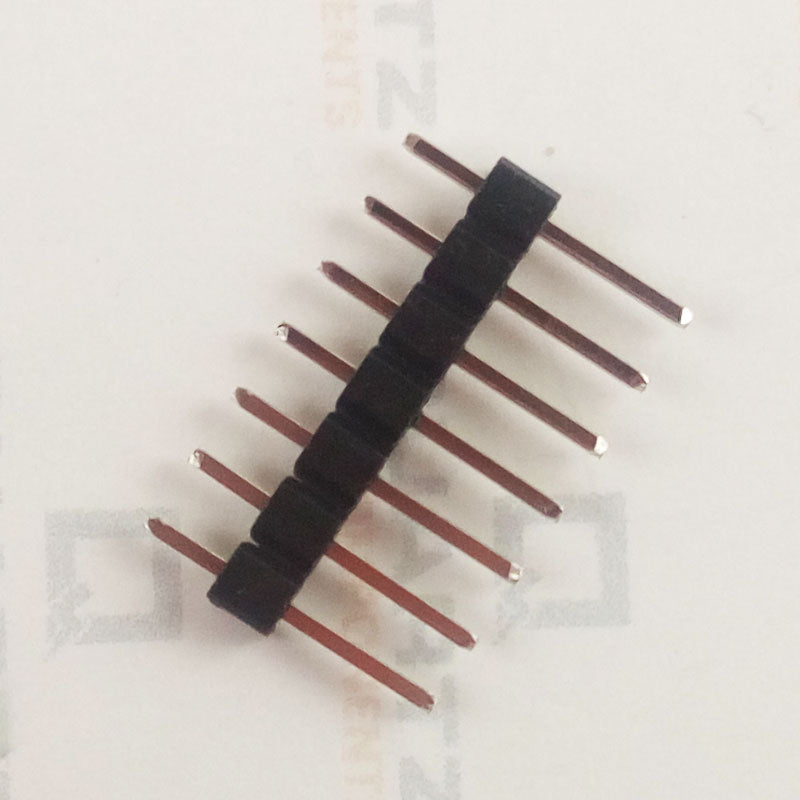
1 × MAX30102 Pulse Oximeter & Heart Rate Sensor Module

Microcontroller, connecting wires, breadboard, battery, enclosure, and other accessories are not included unless specifically mentioned.

Safety & Handling

Use the recommended voltage for the supplied module.
Check VCC and GND polarity before powering the board.
Avoid short circuits.
Handle the optical sensor and PCB carefully.
Keep the sensor surface clean for better experimental results.
Do not use readings from this module for medical decisions.
Disconnect power before changing the wiring.

Ideal For

Students, Teachers, Makers, Biomedical Engineering Projects, Arduino Users, ESP32 Developers, Wearable Technology Enthusiasts, IoT Developers, STEM Labs, Electronics Hobbyists, Engineering Students, Educational Institutions

Reviews

There are no reviews yet.

Be the first to review “MAX30102 Pulse Oximeter & Heart Rate Sensor Module”

Your email address will not be published. Required fields are marked *

Scroll to Top